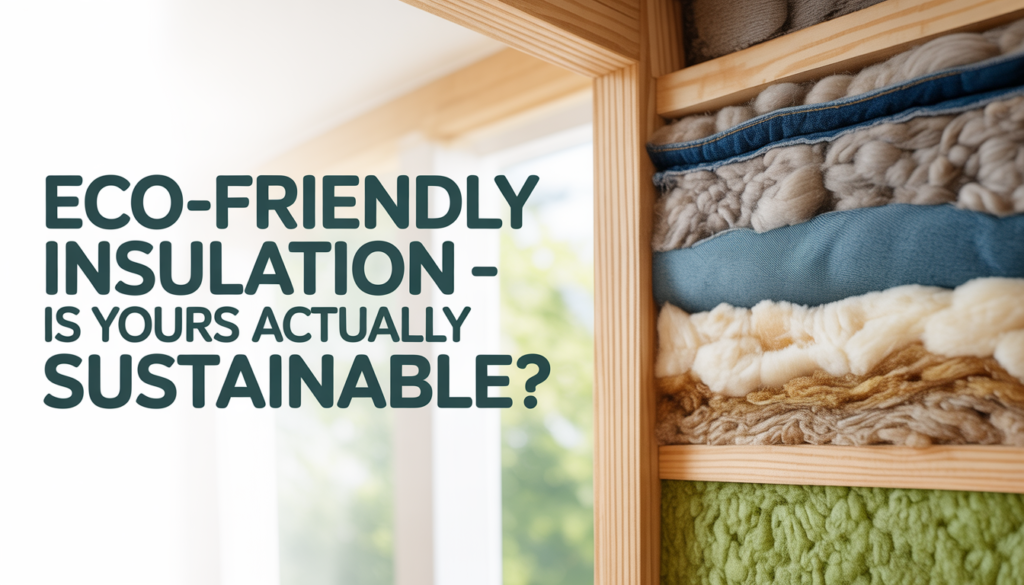
I once spent four hours in my attic wearing a trash bag because I was terrified of the pink fluffy stuff touching my skin. I looked like a very sweaty, very confused superhero, and honestly, the pink stuff still won. If you have ever touched old-school insulation, you know it feels like a thousand tiny needles are giving you a hug you never asked for. That was the moment I realized I needed a change. I wanted a warm home, but I did not want to live inside a giant, itchy chemical sandwich. So, I went on a quest to find eco-friendly insulation that actually works.
Why I Started Caring About My Walls:
When I first started my journey into Sustainable Living, I thought it was all about metal straws and reusable bags. I was wrong. It turns out, the biggest way we impact the Earth is often hidden behind our drywall. Most of us have insulation that is made of glass or plastic, and while it keeps us warm, it is not great for the planet or our lungs.
I remember sitting in my living room, looking at the walls, and thinking about what was inside them. It felt weird to buy organic apples while living in a house wrapped in scratchy chemicals. I wanted my home to breathe just like I do. I wanted materials that came from the earth and could go back to the earth. That is when I discovered the world of Green Building materials.
The Problem With the Old Stuff:
Before we talk about the good stuff, I have to tell you what I learned about the “bad” stuff. Most houses use Fiberglass insulation. It is that pink or yellow fluff that looks like cotton candy but tastes like regret. Please do not eat it.
Making that stuff takes a huge amount of heat and energy. It is basically melted glass spun into fibers. If you have ever seen a factory that makes it, you know it uses a lot of fossil fuels. Plus, it usually has glue in it called formaldehyde. That is the same stuff they use to preserve bugs in science class. I do not know about you, but I do not want to sleep three inches away from bug juice glue.
When I realized my old insulation was hurting my Carbon Footprint, I knew I had to find a better way. I wanted something safe to touch, safe to breathe, and safe for the trees and the oceans.
What Does “Sustainable” Actually Mean?
I used to get confused by big words. People talk about “embodied energy” or “thermal bridges,” and my brain turns off. To me, being sustainable is simple. It means using things that do not run out, things that do not poison us, and things that do not make the trash piles bigger.
When I look for Sustainable Insulation, I ask three questions. First, where did it come from? If it grew in a field or came from a sheep, that is a win. Second, how much energy did it take to make? If a giant factory had to burn coal for a week to make one roll, that is a loss. Third, what happens when I am done with it? If it can turn back into dirt in a hundred years, that is the best thing ever.
My Favorite Discovery:
This is my absolute favorite part of my Sustainable Living story. I found out you can insulate your house with wool. Yes, the same stuff your favorite itchy sweater is made of.
I actually bought a few bags of Sheep’s Wool insulation, and it was a life changer. I could touch it with my bare hands. It felt like I was hugging a very large, very clean sheep. There were no needles, no itching, and no weird chemical smell.
Wool is amazing because sheep grow it every year. They do not need a factory to make it, they just need some grass and a haircut. Also, wool is a superhero when it comes to water. It can soak up moisture without getting moldy, which is a big deal if you live somewhere rainy like I do. It keeps the house warm in the winter and cool in the summer, which helps my Energy Efficiency goals.
The Magic of Recycled Paper:
If you are on a budget, like I usually am, you might like Cellulose insulation. This is basically just old newspapers that have been shredded up. I love this because it takes something we usually throw away and gives it a new job.
I watched the installers blow this stuff into my walls using a big hose. It looked like a gray snowstorm. They treat the paper with a natural salt called borate. This salt is cool because it makes paper fireproof and keeps bugs away. Ants and mice hate the taste of it. So, you get a warm house and a bug-free house at the same time.
Using Recycled Content is one of the best ways to practice Sustainable Living. It keeps paper out of the dump, and it uses very little energy to make. It is way better than making new plastic or glass fibers from scratch.
Cotton Insulation:
Did you know your old pants can keep your house warm? I didn’t either until I started looking into Eco-Friendly Insulation. There is a type of insulation made from recycled denim. It is usually bright blue because it comes from the scraps left over when companies make blue jeans.
I think this is so cool. Instead of those scraps ending up in a hole in the ground, they get turned into soft, blue batts that fit right into your walls. It is very good at blocking sound. If you have a loud neighbor or a kid who likes to play the drums, cotton insulation is your best friend. It is also totally safe to handle. I could have a picnic on a pile of this stuff and feel perfectly fine.
The Weird and Wonderful World of Hemp:
I have to tell you about hemp. People use hemp for everything now, like shirts and oils, but it is also great for houses. They make something called Hempcrete. It is a mix of hemp fibers and lime.
I saw a house made of this once, and it felt so solid. It is not just insulation, it is actually the wall itself. It is “carbon negative,” which means the hemp plant sucked up more carbon from the air while it was growing than the builders used to make the house. That is like a gold medal for Sustainable Living. It is also naturally fireproof and does not rot. It is a bit more expensive, but if you want the best of the best for the planet, hemp is the way to go.
Cork: Not Just for Wine:
I love wine, so I was happy to hear that cork is great for Home Insulation. Cork comes from the bark of a special tree. The best part is that they do not have to cut the tree down to get the cork. They just peel the bark off, and it grows back.
Cork insulation comes in big brown boards. It smells a little bit like a campfire, which I actually like. It is amazing at keeping heat inside. It is also waterproof. Think about it, cork keeps wine inside a bottle for decades without leaking, so it is definitely going to keep the rain out of your walls. It is a bit pricey, but it lasts forever.
My Lesson on the R-Value:
When I was talking to the guy at the hardware store, he kept saying “R-value.” I pretended to know what he meant, but I actually had to go home and look it up. It is actually very simple. The “R” stands for resistance. It just means how good the material is at stopping heat from moving through it.
A high number is like a thick, fuzzy coat. A low number is like a thin t-shirt. When you are looking for Eco Friendly Insulation, you want a high R-value for every inch of thickness. Some green materials, like sheep’s wool, have a very high number. Others, like straw, have a lower number, so you just have to use more of it. Once I understood this, I felt like a pro.
Is It Actually Sustainable? The “Greenwashing” Trap:
I have to warn you about something I learned the hard way. Some companies use the word “green” just to make you spend more money. This is called greenwashing.
I once saw a package of insulation that had a giant leaf on it and said, “Natural.” When I read the fine print, it was mostly just plastic with a tiny bit of recycled stuff mixed in. That is not Sustainable Living, that is just sneaky marketing.
Always look at the label. You want to see what is actually inside. If it says 100% Recycled Content or 100% natural fibers, you are on the right track. If it has a long list of chemicals you cannot pronounce, put it back on the shelf.
Saving Money While Saving the Planet:
A lot of people think that being eco-friendly is too expensive. I thought that too. But I did the math. When I upgraded to Eco Friendly Insulation, my power bill went down by 30%.
Think about it this way. If you buy cheap insulation, you pay less now, but you pay the electric company more every single month for the rest of your life. If you buy the good stuff, you pay a bit more now, but the house stays warm by itself. It is like an investment that pays you back in warmth and extra cash. Plus, you get the “warm fuzzies” knowing you are helping the Earth.
The Importance of Air Sealing:
I learned a big secret during my renovation. You can have the best insulation in the world, but if you have tiny cracks around your windows or doors, it doesn’t matter. It is like wearing a massive puffer jacket but leaving it unzipped.
Before I put in my new Sustainable Insulation, I spent a whole weekend with a tube of caulk. I filled every little gap I could find. This is called air sealing. It is the best friend of Energy Efficiency. It keeps the cold wind from stealing the heat that your insulation is trying to hold onto. Do not skip this step, trust me.
How to Install It Yourself (Or Not):
I am a big fan of doing things myself. I like to save money and feel proud of my work. Some types of eco-friendly insulation are very easy for a normal person to do.
If you are using wool or cotton batts, it is like playing with big Lego bricks. You just cut them to size and tuck them into the walls. Since they are safe to touch, you do not need a hazmat suit.
However, some things are harder. If you want to use blown-in Cellulose, you usually need to rent a machine. It is a two-person job. One person stands outside and feeds the machine, and the other person holds the hose inside. If you do it alone, you will end up with a giant pile of gray dust and a very messy house. I may or may not be speaking from experience here.
Mushroom Insulation: The Future is Fungus:
This sounds like science fiction, but it is real. Scientists are now growing insulation out of mushrooms. They take agricultural waste, like corn husks, and mix it with mushroom roots called mycelium.
The roots grow around the waste and turn into a solid block. It takes about a week to “grow” a piece of insulation. Then they dry it out so it stops growing. It is fireproof, it is strong, and when you are done with it, you can literally crumble it up and put it in your garden as fertilizer. This is the ultimate goal of Green Building. I haven’t used this in my house yet, but I am keeping an eye on it for my next project.
Fire Safety and Your Home:
I used to worry that using “natural” things like wool or paper would make my house a fire hazard. I mean, paper burns, right? But I was surprised to learn that Sustainable Insulation is often safer than the old stuff.
When plastic or foam insulation catches fire, it melts and lets out black, toxic smoke. That smoke is often more dangerous than the fire itself. Natural materials like wool do not really burn, they just char and go out. And as I mentioned, cellulose is treated with minerals that stop flames in their tracks. I actually feel safer with my sheep’s wool walls than I ever did with the chemical fluff.
Moisture and Mold:
One thing I never thought about was how walls “sweat.” If the air inside is warm and the air outside is cold, water can build up inside your walls. If you use plastic insulation, that water gets trapped and creates mold.
Natural materials are much better at handling this. They are “breathable.” They can take in a little bit of moisture and then let it go when the air dries out. This keeps the wood in your walls healthy and prevents that gross “old house” smell. It is a huge part of Sustainable Living because it makes your house last longer.
Where to Buy Green Materials:
When I started, I couldn’t find any of this stuff at my local big-box store. I had to do some digging. I found that there are special stores online and in bigger cities that focus on Green Building supplies.
You might have to search for “Natural Building Supply” or “Eco Home Store.” Sometimes you can even find local farmers who sell wool for insulation. It takes a little more work than just buying whatever is on the shelf, but it is worth it. I felt like a detective finding the best materials for my family.
The Impact on Your Health:
I haven’t coughed or sneezed nearly as much since I switched my insulation. I used to think I just had bad allergies, but it turns out I was breathing in tiny glass fibers and chemical fumes from my walls.
Choosing eco-friendly insulation is just as much about your health as it is about the planet. We spend 90% of our time indoors. The air we breathe inside our homes should be clean. Using natural materials is like giving your house a clean pair of lungs. My kids sleep better, and I feel better knowing I am not exposing them to weird glues and dyes.
My Final Advice for Your Journey:
If you are thinking about upgrading your home, please do not just go for the cheapest option. Look at the big picture. Think about the sheep, think about the recycled newspapers, and think about your own lungs.
Sustainable Living is a marathon, not a sprint. You do not have to fix everything today. Maybe you just start by insulating your attic with some Sheep’s Wool. Or maybe you fill a few drafty spots with some cotton scraps. Every little bit helps.
When I look at my house now, I don’t see a building. I see a partner. My house helps me save money, it helps me stay healthy, and it helps me protect the Earth. And the best part? No more trash bag suits in the attic.
Looking Back at the Project:
I remember the day I finished the last wall. I sat down on the floor and just breathed. The house felt quiet, solid, and safe. There was no chemical smell, just the faint, clean scent of natural fibers.
I realized then that Home Insulation isn’t just about heat. It is about the feeling of a space. It is about knowing that every part of your home matches your values. I am proud of my walls. I know that if this house ever gets torn down, the materials inside will just melt back into the ground and maybe help some flowers grow. That is the true meaning of a sustainable home.
Why You Should Start Now:
The world is changing, and we need to change with it. Using eco-friendly insulation is a simple way to take a stand. It is a way to say that you care about the future.
Plus, with the way energy prices are going, it is just smart. You will save money, you will be more comfortable, and you will have a cool story to tell your friends. You can tell them that your walls are made of old jeans and mushroom roots. It is a great conversation starter at parties, I promise.
So, go ahead and peek into your attic. If you see that old pink fluff, do not be scared. Just know that there is a better way. You can have a home that is warm, cozy, and kind to the world.
Final Thoughts on Sustainability:
I hope my story helps you feel a bit more confident. It can be scary to try new things, especially when they are hidden inside your walls. But the world of Green Building is full of amazing people and materials.
Do your research, ask questions, and do not be afraid to touch the wool. It is a lot softer than you think. Your house is your sanctuary. Make sure it is built with love and with the planet in mind. That is what Sustainable Living is all about.
Conclusion:
In the end, choosing Eco Friendly Insulation is one of the best gifts you can give to yourself and the planet. It is safe, it saves money, and it makes your home a much nicer place to be. I am so glad I made the switch, and I know you will be too once you feel the difference.
FAQs:
1. Does eco-friendly insulation really keep the house warm?
Yes, it works just as well as the old stuff and often even better.
2. Is sheep’s wool insulation expensive?
It costs more at the start, but it saves you a lot of money on bills later.
3. Can I install recycled cotton insulation myself?
Yes, it is very easy and safe to handle without any special gear.
4. Does cellulose insulation attract bugs because it is made of paper?
No, it is treated with natural salts that actually keep bugs and mice away.
5. Will natural insulation rot if it gets wet?
Most types, like wool and cork, handle moisture very well and do not rot easily.
6. Is hemp insulation legal to use in my home?
Yes, it is a perfectly legal and very strong building material for houses.
